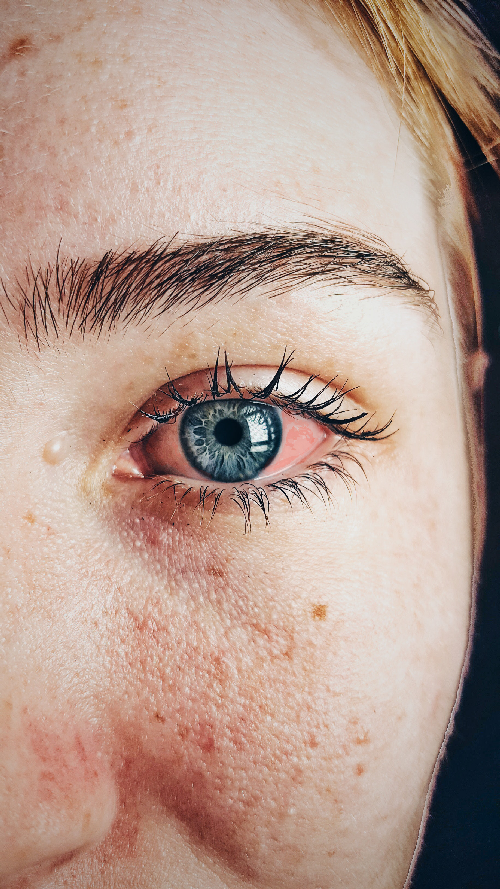
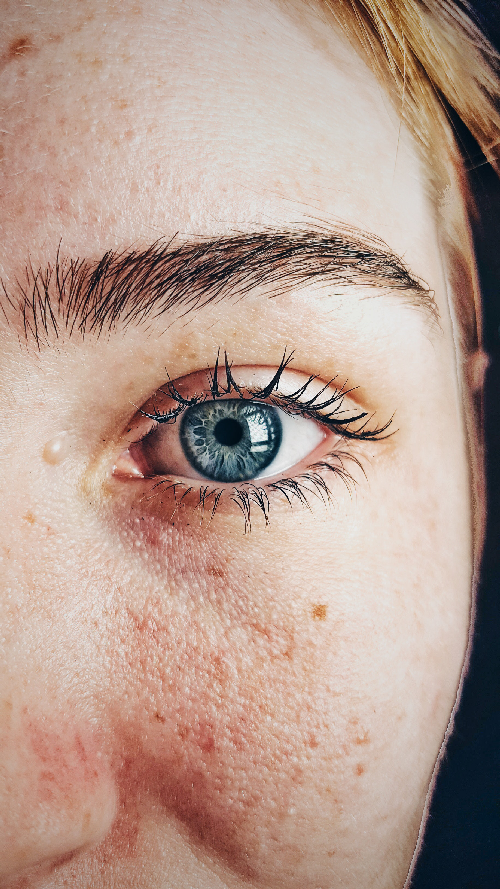
Especially, Dry Eyes disease is a common condition that occurs when your tears aren’t able to provide adequate lubrication for your eyes. Tears can be inadequate and unstable for many reasons. For example, dry eyes may occur if you don’t produce enough tears or if you produce poor-quality tears. Therefore, this tear instability leads to inflammation and damage of the eye’s surface.
Significantly, Dry eyes feel uncomfortable. If you have dry eyes, your eyes may sting or burn. You may experience dry eyes in certain situations, such as on an airplane, in an air-conditioned room, while riding a bike or after looking at a computer screen for a few hours.
Also, Dry eyes can often make eyes feel gritty and dry, and cause them to water a lot. Therefore, it’s caused by blockages in the oil-producing glands in the eyelids. This in turn causes the water in tears to evaporate more quickly than normal because of the lack of oil.
In a multicentre clinic cohort, 86% of patients with dry eye disease showed signs of Meibomian Gland Dysfunction (MGD).
Lemp MA, Crews LA, Bron AJ, Foulks GN, Sullivan BD. Distribution of aqueous-deficient and evaporative dry eye in a clinic-based patient cohort: a retrospective study. Cornea. 2012;31(5):472-8. doi:10.1097/ICO.0b013e318225415a
Additionally, treatments for dry eyes may make you more comfortable. These treatments can include lifestyle changes and eye drops. You’ll likely need to take these measures indefinitely to control the symptoms of dry eyes.
By using Lipiflow or IPL treatment, we can target the cause of MGD rather than just manage its symptoms, and provide relief for the patient. Lipiflow sends gentle pulses of heat and pressure to clear clogged glands, while IPL sends delicate light waves, allowing your tear glands to function normally again.
Generally, LifiFlow and IPL are a very effective treatments according to the patient’s tear dryness grade and they are generally well tolerated. Eye set of the devices are placed on the eyelids of the patient, which the eyepieces apply with mild heat and intermittent pressure (LipiFlow) or light waves (IPL) to remove the obstruction of the glands.
Because MGD is the dominant subtype in clinic populations, LipiFlow and IPL are aimed at that underlying blockage rather than at the symptoms alone. Whether either of them suits your eyes, and how much relief to expect, is decided after an eye examination and a tear-film assessment. In addition, if you have not had Laser Eye Surgery due to your Dry Eye Syndrome, your doctor will recommend you to have Laser Eye Surgery if your dry eye problem disappears after these treatments.
Immediately following the procedure, you can return to your regular activities. Generally, the outpatient procedure is safe.
In severe cases, your doctor may recommend additional treatments.
Also, It provides better relief than other treatments but will require additional sessions for it to be fully effective.
Therefore, you should plan to use dry eye treatment methods, such as artificial tears, between sessions of therapy. Your doctor can provide greater detail on what they recommend for your specific case.